



In this exclusive interview, Mika Jäsberg, Head of Sourcing, Manufacturing, and Operations at CoreHW, shares insights into the company’s next-generation real-time location system (RTLS). He discusses CoreRTLS Tag series, CoreRTLS-LOC4000, and CoreRTLS software—highlighting innovations in accuracy, scalability, and security that position CoreHW as a leader in location intelligence technology.

Q1. CoreHW offers an extensive portfolio of RTLS solutions, including tags, locator, and evaluation kits. Could you give us an overview of how these products address current market needs in real-time location systems?
CoreHW’s RTLS offering is built as a comprehensive, scalable, and high-performance platform that addresses the real-world needs of industries such as healthcare, logistics, and manufacturing. Our CoreRTLS Tag series and locator products work together to deliver up to cm-level positioning accuracy in even the most complex RF environments.
At the heart of this platform is CoreRTLS software, a containerized, real-time positioning engine that manages the full data pipeline—from raw signal capture to final 3D coordinate computation. It processes angle-of-arrival measurements, applies advanced positioning algorithms, and integrates securely with customer infrastructure to deliver precise and low-latency location data. CoreRTLS software is fully optimized for our hardware, and its architecture supports edge-based deployment with high reliability, making it critical for the system’s overall accuracy and robustness.
With energy-efficient design, long battery life, and flexible installation options, our solutions support both asset and personnel tracking with unmatched precision and reliability. The inclusion of Evaluation Kits further accelerates time to market, allowing our customers to build and adapt quickly.
Q2. What are the key differentiators of CoreHW’s RTLS solutions compared to competitors?
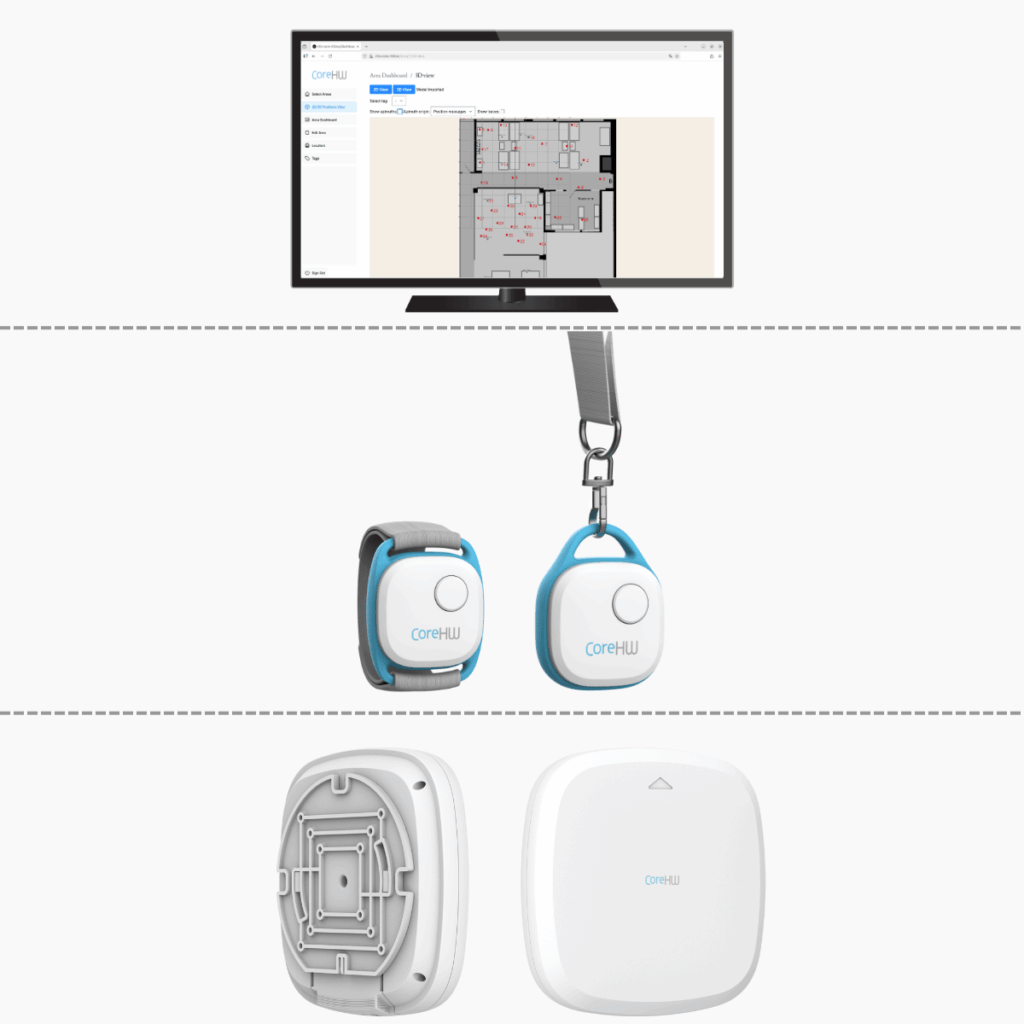
We deliver a fully vertically integrated solution. This means CoreHW designs and controls all key layers of the RTLS stack—including custom ICs (developed for the critical RF signal chain between the antenna and the BLE SoC), RF antennas, firmware, and the CoreRTLS software—which enables tight optimization, high performance, and independence from third-party components.
This end-to-end control enables:
CoreHW also offers what we believe to be the most robust RTLS security architecture in the industry, powered by a full-scale PKI infrastructure. This allows secure device identity, firmware signing, and encrypted communications across the RTLS ecosystem.
Q3. CoreHW recently launched CoreRTLS Tag series. What makes it a standout product in terms of technology and market relevance?
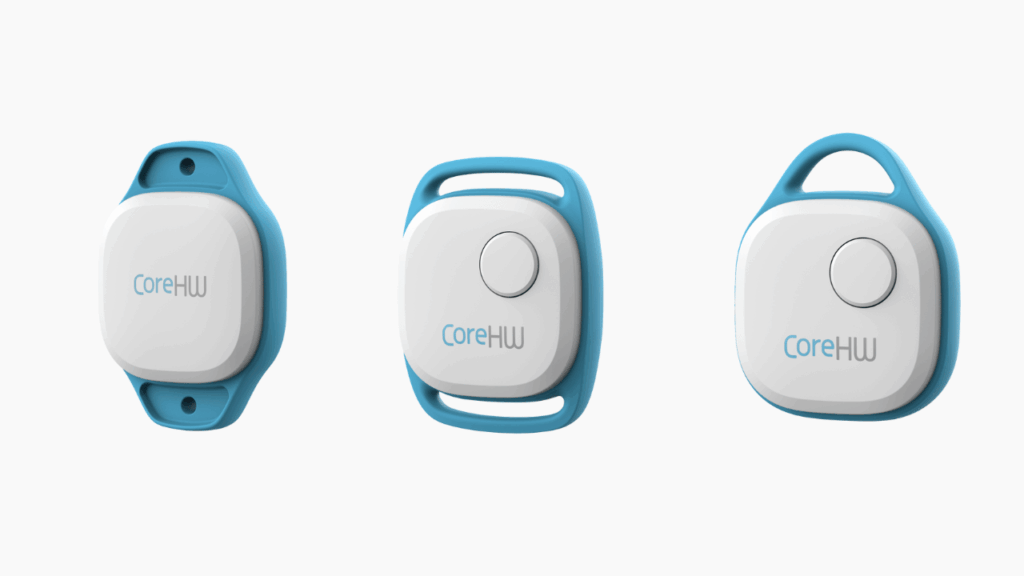
CoreRTLS Tag series stand out for their performance, versatility, and simplicity. They come in multiple form factors—fixed-mount (CoreRTLS-TAG4000), wrist-worn (CoreRTLS-TAG4001), and lanyard (CoreRTLS-TAG4002)—and are built to withstand demanding use cases with IP67 protection and UV resistance. Each tag offers:
All models are equipped with a dual-color LED and a configurable button and can be fully controlled over-the-air via CoreRTLS software. The CoreRTLS-TAG4000 asset tag supports screw mounting with vibration-damping elements—its midframe uses elastic material to absorb shocks, while hard plastic bushings provide robust mechanical stability. This makes it ideal for use on industrial equipment, vehicles, or other environments subject to mechanical stress.
Meanwhile, CoreRTLS-TAG4001 and CoreRTLS-TAG4002 are ergonomically designed for wearable use. Tags are ready for plug-and-play deployment and integrate seamlessly into the locator network, ensuring fast installation and real-world suitability across industries.
Q4. CoreRTLS-LOC4000 is described as an advanced turnkey and ready-to-deploy locator. What unique advantages does it offer for RTLS implementation, especially in challenging environments?
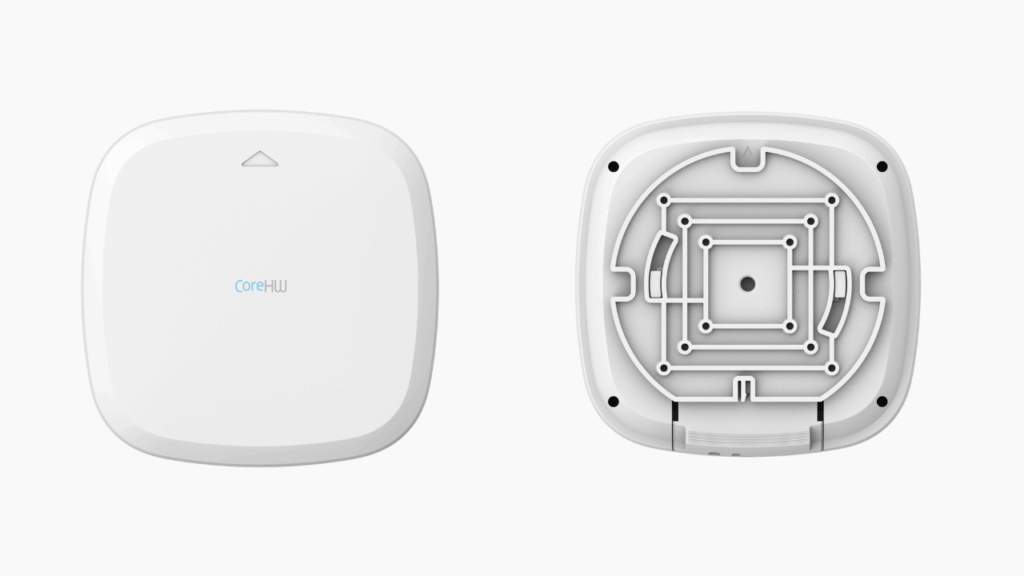
CoreRTLS-LOC4000 is equipped with a proprietary 16-element antenna array that delivers highly accurate Angle-of-Arrival (AoA) positioning with minimal infrastructure. Key benefits include:
It includes a built-in RGB and dual red LED indicator system for visual feedback during deployment and supports Ethernet and 5 GHz WiFi operation for installation flexibility. The unit mounts securely via VESA-compatible plates with a twist-lock mechanism and features a user-accessible Web UI for diagnostics and configuration.
With Web UI-triggered LED blink, EAP-TLS WiFi security, and integrated support for DHCP and manual network settings, CoreRTLS-LOC4000 makes precise installation, setup, and troubleshooting intuitive for field teams.
Q5. Could you elaborate on the software side of CoreHW’s RTLS ecosystem? How does it complement the hardware to deliver seamless and accurate positioning?
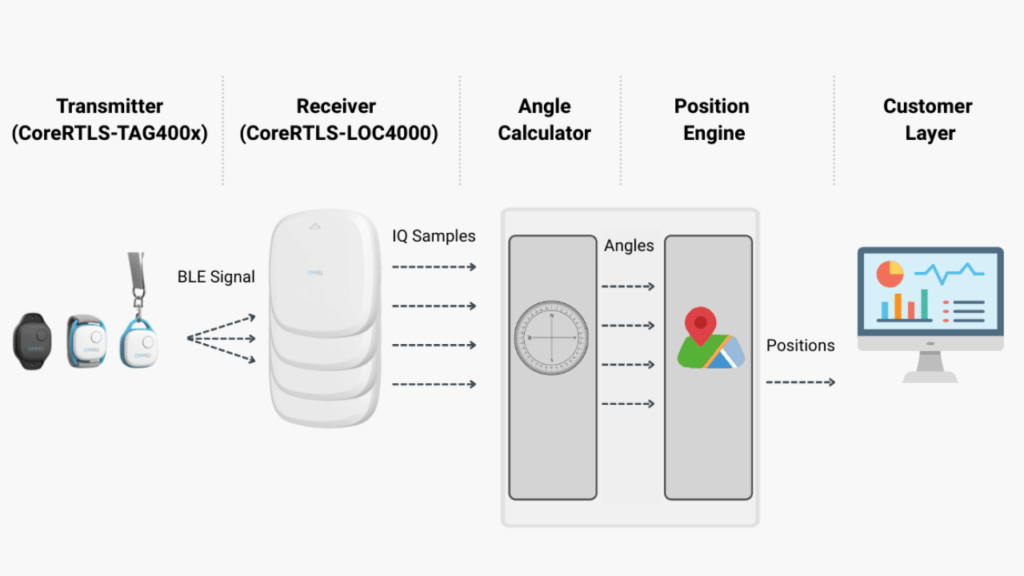
Our CoreRTLS software runs in a containerized environment on Linux and includes:
The system is designed for secure, on-premises deployment using a pre-configured mini PC. It supports a dual-network architecture, isolating locator communication from customer system access for improved security and network control. All critical network services—such as DHCP, DNS, and NTP—can be hosted directly on the device, enabling fully local operation.
The software is fully optimized for tag and locator hardware, ensuring maximum performance and compatibility across all components. Combined with our proprietary algorithms, this allows the system to achieve cm-level 3D positioning accuracy even in complex indoor environments. All system modules run as Docker containers, enabling modularity, simplified updates, and future extensibility.
CoreHW offers industry-leading RTLS system security with an integrated Public Key Infrastructure (PKI). Every tag, locator, and CoreRTLS instance is provisioned with unique identity certificates, and firmware images are digitally signed to verify authenticity. End-to-end encryption, secure onboarding, signed updates, and role-based access control all ensure that system-wide trust is enforced from device manufacturing to deployment.
CoreRTLS software also supports MQTT and Kafka data streaming. Customers can build applications such as health monitoring, geofencing, and lifecycle management on top of CoreRTLS using our defined software APIs. Cloud support was not included in the roadmap, but future releases may include it. Edge/on-premises deployment will be the default delivery model.
Q6. How does CoreHW address challenges such as accuracy, power consumption, and scalability in its RTLS solutions?
For accuracy, we use CoreHW-patented antenna technology in our tags and a custom engineered multi-antenna design in our locators—developed over several years—to deliver cm-level real-time precision. Equally important are our highly sophisticated angle and positioning algorithms, also refined through years of focused development, which are critical to achieving robust and reliable 3D location accuracy even in complex RF environments.
In terms of power consumption, tags include accelerometers that enable support for motion-adaptive beaconing, where transmission intervals can be adjusted based on movement. This feature will allow the system to save power when the tag is stationary while ensuring high responsiveness during motion. Currently, the tags deliver:
For scalability, our architecture supports high-density deployments with 500+ active tags per locator. System performance remains robust even as network size grows, thanks to optimized RF design and practical locator placement strategies. As part of our professional services, we offer support for pre-deployment site planning, RF simulation, and on-site testing to help ensure the best possible coverage and system performance.
Our software is built to support modular, edge-based installations that can scale site-by-site without centralized infrastructure constraints.
Q7. CoreHW emphasizes Evaluation Kits to accelerate product development. How do these designs empower your clients, and what feedback have you received from customers?
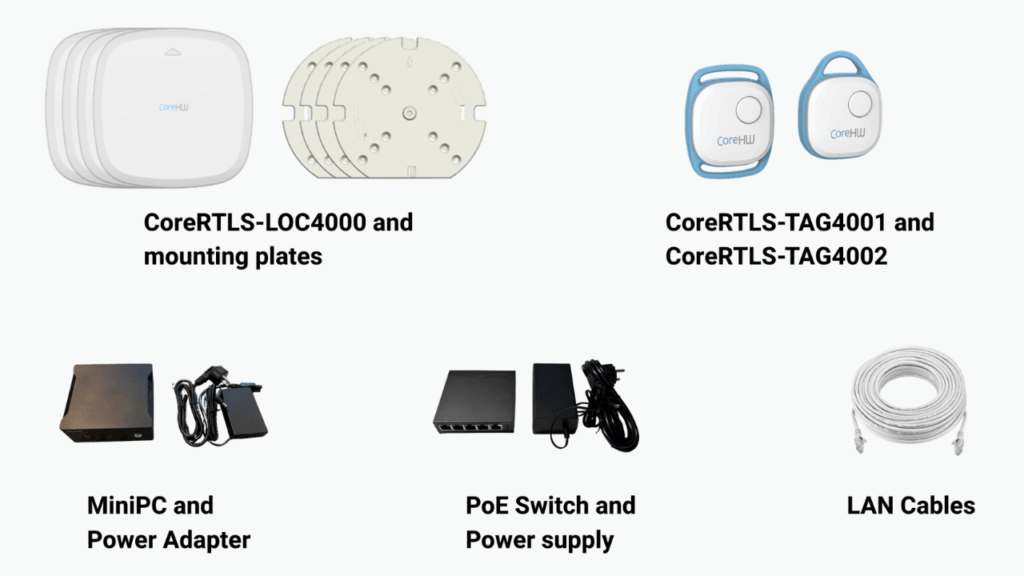
Our Evaluation Kits are complete, pre-validated packages that include tags, locators, and a pre-configured CoreRTLS miniPC. They are designed to give customers a working RTLS system out-of-the-box, enabling rapid evaluation, prototyping, and internal demos without needing to assemble or configure components from scratch.
These kits significantly reduce both technical risk and time-to-market, allowing customers to focus on application development and system integration rather than hardware bring-up.
Customers have praised the kits for their ease of deployment, consistent performance, and the confidence they provide in scaling toward commercial deployment.
CoreRTLS-EVK4 Evaluation Kit for the Gen4 product line is available globally.
Q8. What industries or applications have shown the most demand for CoreHW’s RTLS solutions, and how do your products adapt to the specific needs of these markets?
Demand is highest in:
CoreHW supports deployment across diverse environments by offering robust hardware, industry certifications, and installation models that scale from small indoor zones to large facilities. Our platform is designed to be scalable and configurable, allowing customers to tailor deployments to the specific physical layout, use case, and operational needs of each environment.
Q9. Customization is crucial for unique customer requirements. How does CoreHW tailor its RTLS solutions for specific use cases?
While our current focus is on delivering robust, production-grade products, customization capabilities are intentionally limited during the initial rollout to ensure product stability and timely availability. As such, we do not yet offer for example sensor variants, firmware-level customization, or alternative form factors.
That said, we actively collaborate with customers during the early phases of solution
integration to ensure system alignment with their operational goals. Our roadmap includes plans to expand customization options starting in 2026, including selective modifications for high-volume or strategic deployments.
Q10. Looking at future trends in RTLS technology, what developments or innovations do you foresee in the coming years, and how do you see CoreHW contributing to this vision?
We see growing demand for:
CoreHW is at the forefront of these innovations. Our R&D teams are actively investing in next generation signal processing, ML-enhanced positioning engines, and system-wide optimization tools. Our roadmap may include deployable channel sounding capabilities that bring true distance + direction estimation even from a single locator—revolutionizing installation flexibility and performance.
We believe RTLS will evolve from a support tool into a critical enabler of intelligent, context aware environments—from hospitals to logistics to autonomous systems. CoreHW is building the foundation for that future by delivering technologies that are not only accurate and scalable, but secure, adaptable, and designed for real-world impact.
Q11. How can customers worldwide purchase CoreHW’s RTLS solutions, and integrate it into their operations?
Customers can order CoreRTLS-EVK4 Evaluation Kits directly through our global sales team or authorized distributors. Each kit includes core system components such as:
The complete list of included hardware, accessories, and documentation is available at: https://www.corehw.com/products/reference-design/
All kits are fully assembled and tested before shipment to ensure a smooth evaluation
experience. The system can typically be deployed within a few hours and comes with
comprehensive documentation and onboarding support.
To support integration and long-term scalability, CoreHW provides detailed User Manuals, API documentation, and direct technical consulting. Whether customers are evaluating a new RTLS use case or preparing for scaled deployment, we offer tools and expertise to make the process efficient and successful.
CoreRTLS-LOC4000, CoreRTLS Tag series, and CoreRTLS software can also be purchased individually or as part of custom packages via our global sales team or distribution partners. Customers begin with a Demo License, which is automatically included in every Evaluation Kit.
The Demo License is limited to evaluation use only and does not include updates or production rights. For production use, a Professional License unlocks full RTLS functionality, including API access, software updates, and long-term support. Enterprise-level features, such as RTLS Area Manager and Tag Roaming, will be available later in 2026.
To further support deployment and customer success, CoreHW also offers optional
Professional Services—including deployment kickoff workshops, on-site debugging, and roadmap-driven feature acceleration.
About CoreHW
CoreHW is a Finland-based fabless semiconductor company specializing in advanced RF, analog, and positioning solutions. With expertise in Bluetooth® AoA technology, CoreHW delivers innovative hardware and software platforms that enable precise indoor positioning for healthcare, logistics, industrial, and consumer applications.
Media Contact:
CoreHW Oy
Visiokatu 1
33720 Tampere, Finland
Email: sales@corehw.com
Website: www.corehw.com