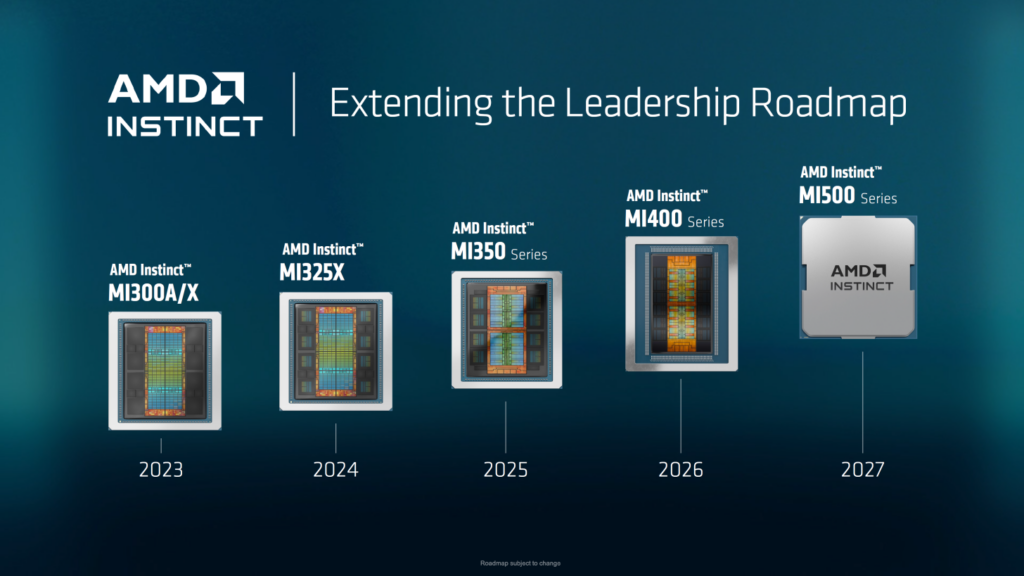
That shift is important because the bottleneck in AI is moving outward from the chip itself. For the last few years, the focus has been on compute power, memory bandwidth, and packaging. Those still matter, but as AI clusters become larger, interconnect efficiency is becoming just as critical. Moving massive amounts of data across chips, boards, and racks consumes huge amounts of power and creates growing limitations for traditional electrical links.
This is where co-packaged optics becomes interesting. Instead of relying only on copper-based electrical connections, co-packaged optics brings optical connectivity much closer to the processor package. The main benefit is lower energy per bit and better bandwidth density. In simple terms, it offers a more scalable way to move data in large AI systems.
If AMD is adopting this approach in MI500, it would show a more mature AI strategy. It would mean AMD is not just trying to win on raw chip performance, but also on system architecture. That matters because AI data centers are increasingly won by the strength of the full platform: compute, memory, packaging, networking, and interconnect.
The GlobalFoundries angle is also important. At first, it may seem unusual that AMD would use one ecosystem for leading-edge compute and another for photonics. But that is probably exactly how future AI systems will be built. AI hardware is becoming more heterogeneous, with different functions produced on different technologies. The compute die, memory integration, advanced packaging, and photonic components do not all need the same manufacturing platform.
That makes silicon photonics a strategic role for companies like GlobalFoundries. In the AI era, the most valuable semiconductor position is not always the most advanced logic node. It can also be the enabling technology around the system, especially when interconnect becomes a limiting factor.
The real takeaway is that AI hardware is becoming less about a single chip and more about the fabric around it. A great accelerator is no longer enough if the system cannot move data efficiently. That is why optics is becoming more relevant. It is not a side feature. It is part of the performance architecture.
If MI500 becomes a real co-packaged optics platform, it could mark an important turning point. It would show that AMD sees the next AI battle clearly: not just building faster GPUs, but building a faster and more power-efficient way to connect thousands of them. That is why MI500 could matter far beyond its compute specs. It may be one of the clearest signs yet that the future of AI performance will depend as much on interconnect architecture as on the accelerator itself.