
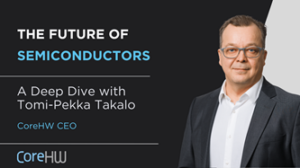
This interview features: Tomi-Pekka Takalo, CEO and co-founder at CoreHW.
Can you describe your company’s founding vision and how it has evolved to address the changing landscape of the semiconductor industry?
CoreHW was founded in 2013 by RF engineers with a vision to deliver high-quality custom
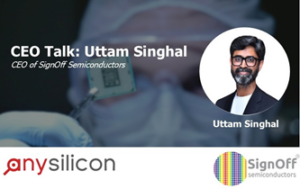
This interview features: Uttam Singhal, CEO, SignOff Semiconductors Pvt. Ltd.
Tell me a bit about your background? How did you first get started with your company?
I have spent over 25 years in the semiconductor industry, beginning my career in full-custom analog and memory design before transitioning
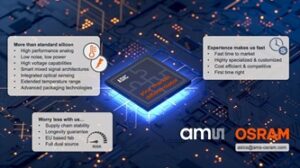
Discover how ams OSRAM’s ASIC customization, in-silicon innovation, and advanced packaging deliver reliable, efficient and high-performance sensing solutions for industrial and medical applications.
Customization to meet power, reliability, and integration needs in next-gen sensing
Across the industrial and medical sectors, engineers and product leaders face the same persistent dilemma: how to deliver smarter, more
Many teams talk about doing an ASIC long before they know whether an ASIC is actually feasible. In practice, ASIC feasibility is not a yes/no question.
It is a balance of economics, risk, schedule, and technical reality.
This article explains what really makes an ASIC project feasible —
Are you not sure whether an ASIC/Chip would be beneficial for you, please try this tool.
Deciding whether to build an ASIC is rarely a clear yes or no. Most teams arrive at the question gradually. FPGA costs rise. Power budgets tighten. Schedules slip. Supply risks appear. At some point, staying on the current platform feels increasingly uncomfortable — but committing to custom silicon feels risky.
Read More