


For many teams, the term “ASIC NRE” is enough to stop the conversation.
It sounds like a single, large, opaque number that appears late in the process and instantly kills the business case. In reality, NRE is not one thing, and it is rarely as arbitrary as it feels.
Read More
Most teams don’t decide to move from FPGA to ASIC.
They get pushed there.
At the beginning of a product’s life, FPGA feels like freedom: fast iteration, low upfront cost, and a clear path to demos and early customers. But once a product starts shipping, the rules change.

As PCIe 5.0 and 6.0 dominate headlines in the semiconductor industry, it’s tempting for every SoC design team to reach for the newest protocol available. But not every application needs blazing-fast 32GT/s throughput—and not every market segment can afford the power, complexity, and cost penalties that come with bleeding-edge PHYs.
Read More

As factories, process plants, and robotics platforms become increasingly intelligent and interconnected, the demand for stable, low-latency data links has pushed Ethernet deeper into embedded systems. However, since designing Ethernet connectivity into industrial chips comes with its technical and logistical hurdles, engineers may face challenges when implementing Ethernet in industrial
Read More
Kuala Lumpur, Malaysia – September 30, 2025 – Key ASIC Berhad (“Key ASIC” or “the Company”), a leader in ASIC design and innovation, has signed a contract worth RM1.11 million with a navigation systems company in the Middle East to jointly develop an AI-driven RF-integrated navigation chip.
The
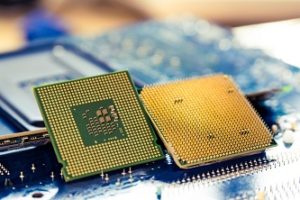
As more companies pursue ASICs to gain product-level differentiation, the ASIC road from concept to chip is paved with unseen challenges.
Many design teams, especially startups or system OEMs new to silicon, encounter the same pitfalls that delay projects, drain budgets, or derail product timelines.
Based on our experience