Find companies providing IC FIB Services

The richest directory of ASIC/IC FIB services worldwide. Find the IC FIB services companies that matches your needs.

49 results found See AllSend Email to All

Focused Ion Beam (FIB): Semiconductor Failure Analysis

Focused Ion Beam (FIB) technology is one of the most versatile tools used in semiconductor failure analysis and microelectronics characterization. A FIB system directs a tightly focused beam of ions onto a sample. By controlling the beam current, energy, position and scanning pattern, engineers can remove material from extremely specific locations, ...

View article

Faraday's Launched SerDes Advanced Service to Accelerate ASICs into Production

Hsinchu, Taiwan -- July 11, 2023 -- Faraday Technology Corporation (TWSE: 3035), a leading ASIC design service and IP provider, launched its SerDes (serializer/deserializer) total solution comprises SerDes IP design on UMC 28nm and the corresponding IP advanced (IPA) service which includes IP subsystem integration, PHY hardcore implementation, and signal integrity/power ...

View article

IC Failure Analysis Techniques: A Complete Guide

When an integrated circuit fails, identifying the damaged component is only part of the challenge. Engineers must determine where the failure occurred, what physical or electrical mechanism caused it, and ultimately why it happened. This requires a combination of specialized IC failure analysis techniques. Some techniques detect electrical abnormalities without physically altering ...

View article

Qmode project with QuiX

The Qmode project is funded with an MIT-R&D collaboration project grant from the Provincie Overijssel, dedicated to stimulate the innovation and development of products, processes and services of local SMEs working in the Dutch Top Sectors. The collaboration established in Qmode will help QuiX secure a leading position in the ...

View article

Comparing Au, Pt, Ag and Cu Wire Bonding

With the creeping rise in the price of gold, many microelectronics manufacturing companies have been looking for alternatives to reduce the cost of ball bonding. Recently, the trend has been to look into the use copper wire. However, there are many drawbacks to using copper wire, including the short shelf ...

View article

The 6 Must-Do’s for Semiconductor Fabless Start-ups

Getting funding for a semiconductor startup is not getting easier. According to CBIngishts, there have been fewer than 20 Angel/Seed and Series A deals in the USA in each year since 2009.   So where is all the funding channeled to? In 2013, close to a quarter of all VC funding was ...

View article

BCD, CMOS, FinFET, SOI, GaN & SiC Technologies Explained

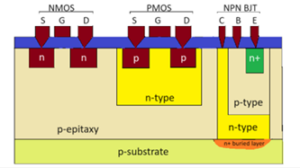
Introduction to Semiconductor Semiconductors have a small energy gap between the conduction and valance bands, and their conductivity is between insulators and conductors. At absolute zero temperature, semiconductor materials are pure insulators and gradually increase with temperature. Temperature and doping are the two mechanisms to manage the conductivity of semiconductors. Doping ...

View article

IC Decapsulation: Methods, Process and Applications

Many semiconductor failure-analysis techniques require direct access to structures that are hidden inside an IC package. The semiconductor die, bond pads, bond wires and other critical components may be completely covered by epoxy molding compound or other packaging materials. Before these structures can be examined using techniques such as optical microscopy, emission ...

View article

NVM Express IP for Enterprise SSDs - Overview and Implementation

The NVM Express (NVMe) specification has been introduced in 2011. Five years later, it is definitely adopted as the new standard storage interface for Solid-State Drives (SSD). Even if SAS and SATA SSDs are still dominating the market (in unit shipment), the PCIe SSD market share is growing fast and ...

View article

Common IC Failure Mechanisms and Their Causes

Integrated circuits can fail for many different reasons. Some failures originate inside the semiconductor die, while others result from packaging, manufacturing, assembly, electrical overstress or the environment in which the device operates. Common IC failure mechanisms include electrostatic discharge (ESD), electrical overstress (EOS), electromigration, dielectric breakdown, interconnect defects, corrosion, contamination, thermal ...

View article
Logo Image
Privacy Overview

This website uses cookies so that we can provide you with the best user experience possible. Cookie information is stored in your browser and performs functions such as recognising you when you return to our website and helping our team to understand which sections of the website you find most interesting and useful.