


STATS ChipPAC Pte. Ltd. (“STATS ChipPAC” or the “Company”), a leading provider of advanced semiconductor packaging and test services, announced Friday that the Board of Directors of its holding company, Jiangsu Changjiang Electronics Technology Co., Ltd (‘JCET’) has appointed Dr. Lee Choon Heung as Chief Executive Officer (‘CEO’) for JCET
Read More
Amkor Technology announced on September 10th the opening of its new manufacturing and test plant at Longtan Science Park in Taiwan.
“Demand for Amkor’s advanced assembly and test services in Taiwan continues to increase. The opening of our fourth factory in Taiwan will allow us to keep
Read More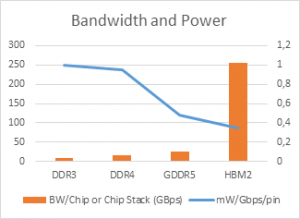
A smaller form-factor with higher data transfer rate, signal integrity, memory bandwidth, and thermal capability are all criteria for improving system performance. Today’s highly integrated and portable products strive to improve all of these metrics. Through Silicon Via (TSV) packaging technology enables homogenous and heterogeneous integration of logic and memory
Read More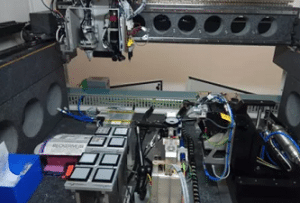
Innovative medical devices, autonomous vehicles, IoT applications, cloud based organizations, 5G communication networks and more high-end industries are basing their products on microelectronics and micro-optical components.
Constant reduction in chip size and uncompromising placement accuracy demands are some of the dominant challenges those industries are facing.
We, in Beckermus Technologies,
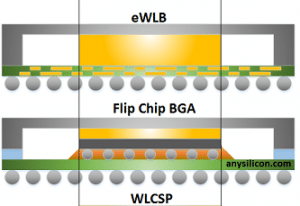
The eWLB (Embedded Wafer Level Ball Grid Array) package technology was developed in cooperation between 3 companies: Infineon, STMicroelectronics and STATS ChipPAC to solve an interconnect problem that was introduced by the fan-in packaging technology (WLCSP).
The first eWLB package was used in mobile phones in 2009 and since
Consumer electronics markets, the mobile phone market in particular, are extremely demanding. They are driven by the desire to pack more and more functionality and enhanced value into the same size handheld device, and often at lower costs. This drive towards smaller, cheaper and thinner consumer electronics has driven the
Read More