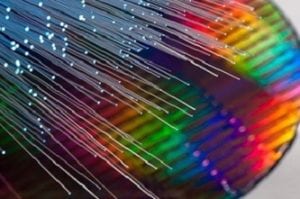
October 15, 2024 – Xscape Photonics, a pioneer in next-generation data center connectivity, today announced the closing of a $44 million Series A funding round, bringing its total funding to $57 million. The round was led by IAG Capital Partners and included participation from Cisco Systems Inc., Nvidia Corp., Altair ...
Introduction to Semiconductor
Semiconductors have a small energy gap between the conduction and valance bands, and their conductivity is between insulators and conductors. At absolute zero temperature, semiconductor materials are pure insulators and gradually increase with temperature. Temperature and doping are the two mechanisms to manage the conductivity of semiconductors. Doping ...
OBIRCH (Optical Beam Induced Resistance Change) is a laser-based fault-localization technique used in semiconductor failure analysis to identify electrically abnormal regions such as resistive shorts, leakage paths, defective vias and interconnect problems.
The technique works by scanning a focused laser across an electrically biased semiconductor device. Local laser heating changes the ...
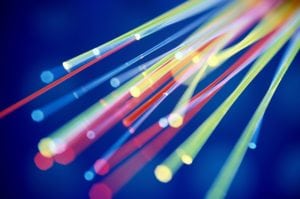
Lately, there’s been a lot of buzz about silicon photonics in the data center industry. What’s it all about? The ever-expanding digital universe is being driven by cloud computing, mobile data, video streaming, and Internet-of-Things (IoT). Today, it’s estimated that by end of 2016, more than 6 zettabytes (i.e., the ...
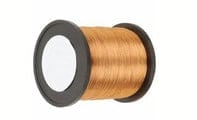
With the creeping rise in the price of gold, many microelectronics manufacturing companies have been looking for alternatives to reduce the cost of ball bonding. Recently, the trend has been to look into the use copper wire. However, there are many drawbacks to using copper wire, including the short shelf ...
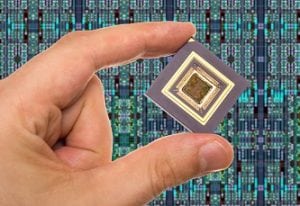
Palo Alto, CA - 25 March 2025. Sarcina Technology, a global semiconductor packaging specialist, is excited to announce the launch of its innovative AI platform to enable advanced AI packaging solutions that can be tailored to meet specific customer requirements. Leveraging ASE’s FOCoS-CL (Fan-Out Chip-on-Substrate-Chip Last) assembly technology, this platform ...
Integrated circuits can fail for many different reasons. Some failures originate inside the semiconductor die, while others result from packaging, manufacturing, assembly, electrical overstress or the environment in which the device operates. Common IC failure mechanisms include electrostatic discharge (ESD), electrical overstress (EOS), electromigration, dielectric breakdown, interconnect defects, corrosion, contamination, thermal ...
IC short circuit failure analysis is the process of determining where an unintended electrical connection exists inside a semiconductor device, package or interconnect structure and identifying the physical defect that created the short.
A short circuit may initially appear only as excessive supply current, unexpectedly low resistance between two nodes, abnormal ...
Need semiconductor failure analysis services? AnySilicon helps semiconductor companies, fabless companies, IDMs, electronics manufacturers and engineering teams identify failure analysis laboratories with the equipment and expertise required to investigate IC, wafer, die and semiconductor package failures.
A good semiconductor failure analysis lab does more than operate laboratory equipment. The laboratory must ...
Scanning Electron Microscopy (SEM) is one of the most important imaging techniques used in semiconductor failure analysis. While optical microscopes remain extremely useful for initial inspection, many semiconductor defects are simply too small to characterize adequately with visible-light microscopy. SEM uses a focused beam of electrons rather than light, allowing engineers ...